A Simple Capture, Analysis and Report (Part 4)
http://www.youtube.com/watch?v=vZCKb4ikX1s This is the final part of our four part tutorial. This adds a report to the worksheet we developed in part 3.

http://www.youtube.com/watch?v=vZCKb4ikX1s This is the final part of our four part tutorial. This adds a report to the worksheet we developed in part 3.
http://www.youtube.com/watch?v=gvwwfCampas Today we have the third of our four part tutorial. Here we show how to quickly build a worksheet to analyze the data we captured in parts one and…
http://www.youtube.com/watch?v=gvwwfCampas Today we have the third of our four part tutorial. Here we show how to quickly build a worksheet to analyze the data we captured in parts one and…
http://www.youtube.com/watch?v=4ejGBG5ImfY Part two of the four tutorials showing a simple setup to capture, analyze and produce a report using Prosig’s DATS software and P8000 hardware. This part deals with setting…
http://www.youtube.com/watch?v=4ejGBG5ImfY Part two of the four tutorials showing a simple setup to capture, analyze and produce a report using Prosig’s DATS software and P8000 hardware. This part deals with setting…
http://www.youtube.com/watch?v=dGRzTxzUWfE The first part of a series of four tutorials showing a simple setup to capture, analyze and produce a report using Prosig's DATS software and P8000 hardware. Part 2…
http://www.youtube.com/watch?v=dGRzTxzUWfE The first part of a series of four tutorials showing a simple setup to capture, analyze and produce a report using Prosig's DATS software and P8000 hardware. Part 2…

The blog now has a mobile interface for those of you with smartphones and other mobile devices. No special action is needed. Simply browse to the blog - https://blog.prosig.com -…

 The latest version of Prosig’s DATS software was released today. This version contains a number of significant enhancements including (more…)

The latest version of Prosig's DATS software was released today. This version contains a number of significant enhancements including new drivers for Prosig P8000 system that fully support 64-bit Windows…
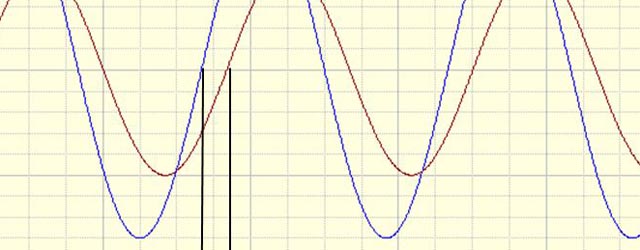
In one of our recent articles a question was asked regarding the practical use of real & imaginary type plots compared with modulus & phase type plots. In general, noise…

Prosig will be at the 2011 SAE Noise & Vibration Conference in Grand Rapids. Among the hardware and software on display will be some of the latest developments to Prosig…

This article documents an investigation into voltage levels provided by an automotive cigar lighter socket. These sockets are nowadays used to power a wide variety of devices. It is, in…

For many years Prosig have been represented in Australia by Ko Oosterhuis at ETMC Technologies Pty Ltd . The partnership is set to continue now that Miroslav Dosen has taken…

Over the past few years it has been impossible to ignore the rise of social networking. Sites such as Facebook & Twitter have come to dominate the Internet to such…

Prosig are pleased to announce a new partnership deal that sees Hoskin Scientific become the official supplier of Prosig systems in Canada. For over fifty years, Hoskin Scientific has been…
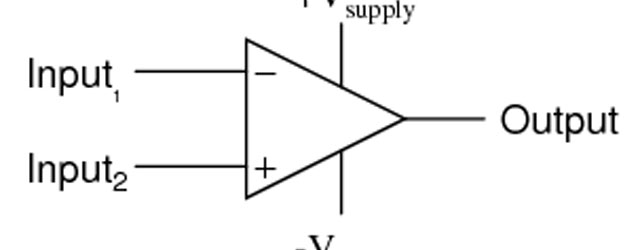
Prosig data acquisition systems use differential inputs, but what are they and why are they so special? This subject is not always fully understood and, therefore, the focus of this…

A short tutorial video on how to add a DATS graph to a Powerpoint slideshow.

Here is a great little collection of engineering animations from the simple everyday to the more sophisticated. A brilliant way to learn how things work. We hope you like them. Please leave your comments.
Engine power enters through the shaft on the left and is transferred out of the gearbox on the right. The lower shaft is known as the layshaft. You can find out more about manual gearboxes at How Stuff Works.

It's a new year and so we thought it was time for a new look for the Noise & Vibration Measurement Blog. After a reviewing our needs and a bit…

Since it’s Christmas Eve Eve, here is a little lighthearted Christmas entertainment. Regular readers of this blog or those who follow our Facebook or Twitter feeds will know that some of us are big fans of well engineered Lego projects. So, since many of us will soon be waiting our turn with the children’s or grandchildren’s Christmas Lego, we have collected together eight of the best videos of Lego engineering projects that we could find. Do you know of any more similar Lego projects? Then leave a link in the comments at the end of the post. Enjoy…
(more…)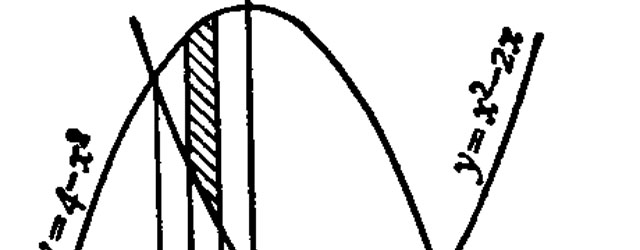
From time to time I meet engineers who are interested in the conversions between acceleration, velocity and displacement. Often, they have measured acceleration, but are interested in displacement or vice versa. Equally, velocity is often used to find acceleration. This article outlines the nature of the conversion between these units and will suggest the preferred method for doing so. .

For fans of the moving image Prosig now have their own YouTube channel. The channel will be used to post videos on all aspects of Prosig's activities from our portable…
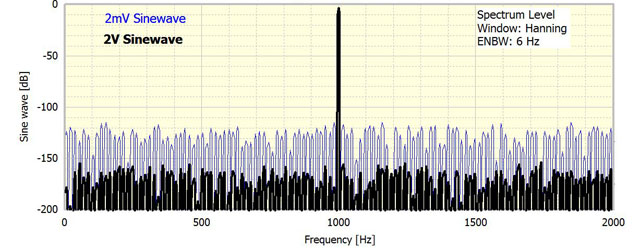
At least one manufacturer of data acquisition systems claims to achieve an incredibly high dynamic range (160dB) when capturing data. This is supposedly achieved by the use of dual-range data acquisition architecture. Such systems have two analog-to-digital convertors for each input channel; one of the ADCs captures the full voltage range of the input signal and the other ADC captures the input signal only when it is small. This article explains the facts behind the figures and shows that the use of Dynamic Range as a measure of precision can be misleading.
The latest version of the DATS software package - V7.0.17 - is now available for customers to download. This version contains a great new productivity feature - worksheet zooming. It's…