[Video] Calibrating a strain gauge for use with a Prosig P8000 system
James Wren (Prosig UK) steps through how to calibrate a strain gauge for use with a Prosig P8000 system. http://www.youtube.com/watch?v=BAh9PS632Tk

James Wren (Prosig UK) steps through how to calibrate a strain gauge for use with a Prosig P8000 system. http://www.youtube.com/watch?v=BAh9PS632Tk
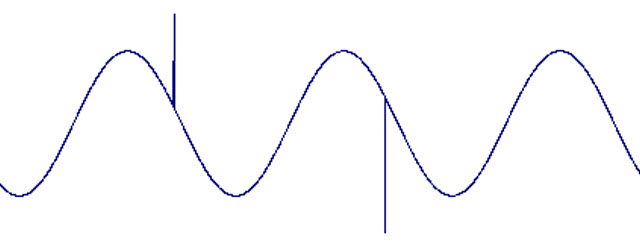
Whether you call them spikes, glitches, anomalies or data dropouts, these phenomena have been a problem to engineers ever since they started recording data. There are any number of reasons…
A DATS user asked…
We are using the third octave band filter at very low frequencies (~1Hz) and I noticed that the response of the filter could introduce very significant errors for short or transient signals. Looking a bit more in details at the function, the help says:
“For audio work ISO standards use a reference frequency of 1kHz not 1Hz”
Does that implies that for non-audio work, a reference frequency of 1Hz should be applied? If yes, is it possible to change this reference frequency in the dats function?
Dr Mercer replied…
Essentially there is no problem and no need to change the reference frequency provided you use Base 10 mode and not Base 2. Base 10 is the ANSI S1.11-2004 preferred scheme. (more…)

Our engine model demonstrator being put through its paces. Runups, rundowns and 'overclocking' https://www.youtube.com/watch?v=jG7aVK7aBp0
A simple tutorial that explains how to use the DATS Acquisition software to set up a Prosig P8000 to capture data from a CAN-bus. http://www.youtube.com/watch?v=XeAuntGW-O4

We are often asked about AC and DC coupling. This is important to understand when working in the signal processing field. In terms of AC and DC Coupling, what is…
Using a Prosig P8000 system with a 8424 DAC (digital-to-analogue) card fitted, it is possible to generate signals of any type. Typically, these might be sinewaves, chirps, random, bursts, sweeps…
“How do I balance a shaft?” seems like a fairly straightforward question, but there are a number of things that we need to understand first. Here we look at a number of key concepts that need to be understood in order perform balancing.
Well broadly speaking to balance a shaft, mass must be added or removed at certain angles. The concept being that the centre of gravity and rotational centre of the shaft will be equal when the shaft is balanced. (more…)
 As mentioned in a previous post and in our last email newsletter (signup form on the right of this page) we are pleased to announce that the preview version of the new DATS Hammer Impact software is now available for download. (more…)
For anyone curious about Prosig's DATS software & P8000 hardware running under the newly released Microsoft Windows 8 we can report that everything works as smoothly as ever. Here at…

Prosig will be at Automotive Testing Expo North America from today, October 23rd, until October 25th 2012. Among the hardware and software on display will be some of the latest developments to…
The latest version of the DATS software is now available. Log in to the Prosig support site to download your copy. The new version, V7.0.23, contains many new features, improvements and bug fixes. Read on to find out a little of what you can expect. (more…)
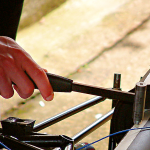 After listening to customer feedback, we have completely re-engineered the DATS Hammer Impact software. The new version will ship with the next DATS update (not the soon-to-be-released V7.0.23). In the meantime you will be able to download and preview the new package. You will of course need a P8000 system and a DATS licence with the Hammer Impact option enabled. (more…)
https://www.youtube.com/watch?v=v32IhaUVGpM

There are many reasons to measure and analyze noise. It may relate to legislation or regulations that limit noise in certain environments, we could be using the noise to investigate…
The Prosig P8000 Auto-Zero function is used to remove the DC content of a signal.
For example, if you have a sine wave that is ±5 volts about 0 volts it has no DC offset. But if you have a sine wave with ±5 volt amplitude about 3 volts, then it has a 3 volt DC offset. Below is an example of these two sinewaves.

Following on from the recent post regarding of the 2012 Survey Prize Draw we have more prize giving news.

The 2nd Annual Prosig Prize for Engineering at Portsmouth University has been awarded to Ashley Stehr for his project “Developing an engineering mechanism to reduce the effects of rapid rotational motion caused by the shocks inherent with high speed craft”. (more…)
Thank you to everyone who completed our 2012 User Survey. The results were, as always, fascinating and will be used to improve our future hardware & software products. We are…

This article is a follow on from What Is Resonance? (Part 1) and answers some of the issues not covered in that post. How do you find the resonant frequency…

The 2nd Annual Prosig Prize for Engineering at Portsmouth University has been awarded to Ashley Stehr for his project “Developing an engineering mechanism to reduce the effects of rapid rotational motion caused by the shocks inherent with high speed craft”. Ashley is in his third year studying for an MSc in Mechanical Engineering. His project was supervised by Dr Ya Huang. Ashley’s project poster is shown below (click for a larger view).

In automotive NVH circles, ride behaviour is often referred to as primary and secondary ride, but what do these terms really mean. (more…)
 Using 50? or 75? cable will not have any negative effects on the P8000 at all. (Generally speaking, only large voltages will damage the P8000). The impedance of the cable can only ever effect the signal the cable is carrying. (more…)
This article addresses two basic approaches to analyzing rotating machinery during transient (sweeping rpm) conditions. The first is the traditional method which uses Frequency (FFT) Spectrum analysis at target rpm…
A simple question should have a simple answer and that answer is “No”.
As usual, however, life is never that simple. (more…)
A user has three signals captured using a triaxial accelerometer and asked “What is the simplest way to get the XYZ resultant from run-up file?” He had tried forming a resultant of the raw time histories, but didn’t fully understand the resultant time history.
Of course, the correct way of processing the data is to calculate the individual waterfalls from the x, y & z data and then calculate a resultant waterfall. (more…)